
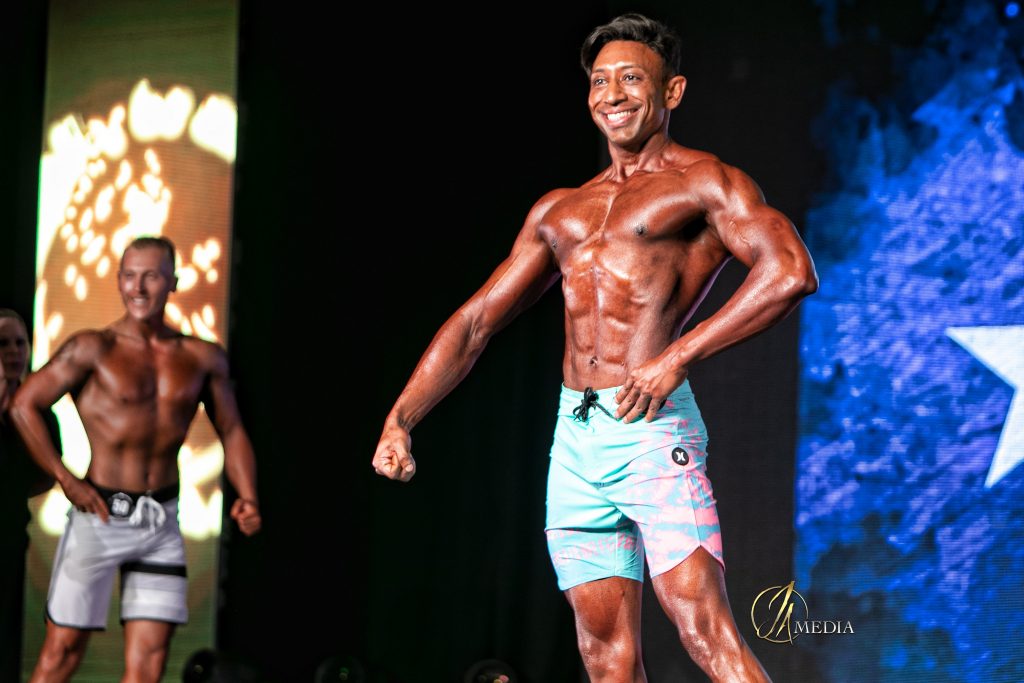
I was 20 pounds overweight, chronically exhausted, and running on coffee and willpower. As an internal medicine hospitalist, I spent 12-hour shifts managing other people’s health crises while my own body was quietly falling apart.
The irony wasn’t lost on me.
One night, after another brutal shift, I caught my reflection in the hospital bathroom mirror. The man staring back looked older than his years—pale, depleted, defeated. And I realized: I’d become the very patient I was treating.
That was the moment everything changed.The Descent: How Physician Burnout Destroys More Than Careers
Physician burnout isn’t just about being tired. It’s a systematic erosion of everything that made you want to become a doctor in the first place.
For me, it looked like:
- Treating patients like problems to solve, not people to heal
- Feeling nothing when good outcomes happened
- Dreading every shift
- Using food, alcohol, and Netflix to numb the constant low-grade despair
- Watching my relationships suffer because I had nothing left to give
- Gaining weight despite “knowing better”
- Experiencing brain fog, poor sleep, and zero energy outside of work
The worst part? I was prescribing medications for metabolic disease, hormonal imbalances, and stress-related illness—conditions I was personally experiencing—without addressing any of the root causes in my own life.
I’d become a hypocrite in a white coat.
But here’s what most people don’t understand about physician burnout: it’s not a personal failing. It’s a systemic disease. The healthcare system is designed to extract maximum productivity while providing minimal support. It rewards speed over depth, volume over value, and compliance over critical thinking.
I could have stayed in that cycle. Many do. But something in me refused to accept that this was as good as it gets.The Transformation: How Competition Became My Laboratory
I’d always been interested in fitness, but I’d never been disciplined about it. When I decided to compete in bodybuilding (IFBB), it wasn’t because I wanted to stand on stage in a tiny suit—though that became part of it.
It was because I needed to become my own case study.
If I was going to tell patients to change their lifestyles, I had to prove it was possible. I had to understand—viscerally, not intellectually—what it takes to transform your body, your metabolism, your energy, your health.
So I did what any obsessive physician would do: I treated my own body like a research project.
I learned:
1. Hormones Run Everything
No amount of willpower can overcome hormonal dysfunction. When my sleep was poor, my cortisol stayed elevated, my testosterone dropped, and my body held onto fat no matter how hard I trained. Fix sleep = fix hormones = body composition transforms.
2. Metabolism Is Not a Math Equation
“Calories in, calories out” is a lie. Two people can eat the same diet and have completely different outcomes based on insulin sensitivity, gut health, stress hormones, thyroid function, and metabolic flexibility. Personalization isn’t optional—it’s essential.
3. Recovery Is Where Adaptation Happens
Training breaks you down. Recovery builds you up. Most people over-train and under-recover. The same principle applies to life: chronic stress without recovery = disease.
4. Body Composition Is a Biomarker of Metabolic Health
When I optimized my training, nutrition, and recovery, my labs transformed: inflammation markers dropped, lipid panels improved, insulin sensitivity increased, testosterone normalized. Body composition isn’t vanity—it’s a window into metabolic function.
5. You Can’t Out-Train a Broken Lifestyle
I learned this the hard way. No amount of gym time could compensate for sleep deprivation, chronic stress, poor nutrition, and emotional disconnection. Health is holistic or it’s nothing.
Competing taught me what medical school never did: how to actually optimize human performance and longevity.How This Changed the Way I Practice Medicine
After competing, I couldn’t go back to practicing medicine the old way. I’d seen too much. Learned too much. Felt too much.
I started asking different questions in patient encounters:
Instead of “What’s your blood pressure?”
I ask: “How’s your sleep? Your stress? Your recovery?”
Instead of “Your cholesterol is high, here’s a statin.”
I ask: “Let’s look at your metabolic health as a whole—insulin, inflammation, hormones, body composition. What’s the root cause?”
Instead of “Lose weight and exercise more.”
I ask: “What’s standing in the way of you prioritizing your health? Let’s address that first.”
I realized: patients don’t need more prescriptions. They need optimization strategies.
And optimization isn’t one-size-fits-all. It requires:
- Comprehensive lab work (not just the standard panel)
- Understanding hormonal health (testosterone, estrogen, thyroid, cortisol)
- Metabolic assessment (insulin sensitivity, inflammatory markers, nutrient status)
- Personalized interventions (not generic advice)
- Accountability and support (not just a 15-minute appointment)
This is the medicine I wish I’d had when I was burned out. This is the medicine I now offer at Prime Vitality Total Wellness & Medical Spa.
If You’re Ready to Optimize, Not Just Survive
Whether you’re an executive burning out, an athlete hitting a plateau, or someone who’s “tried everything” and still doesn’t feel right—there’s a different way.
At Prime Vitality, we specialize in:
- Metabolic Optimization Programs that address hormones, insulin sensitivity, and body composition
- Hormone Optimization Therapy for men and women looking to restore vitality, energy, and performance
- Personalized functional medicine that digs deeper than standard labs
Because you don’t just want to “manage” your health. You want to thrive.
Ready to transform?Schedule your consultation and let’s optimize your biology for performance and longevity.
Dr. Shiv Kumar Goel is a board-certified internal medicine physician, IFBB competitor, and founder of Prime Vitality Total Wellness & Medical Spa. After experiencing physician burnout firsthand, he rebuilt his health through competitive bodybuilding—and now helps patients optimize their metabolism, hormones, and performance using evidence-based functional medicine.